
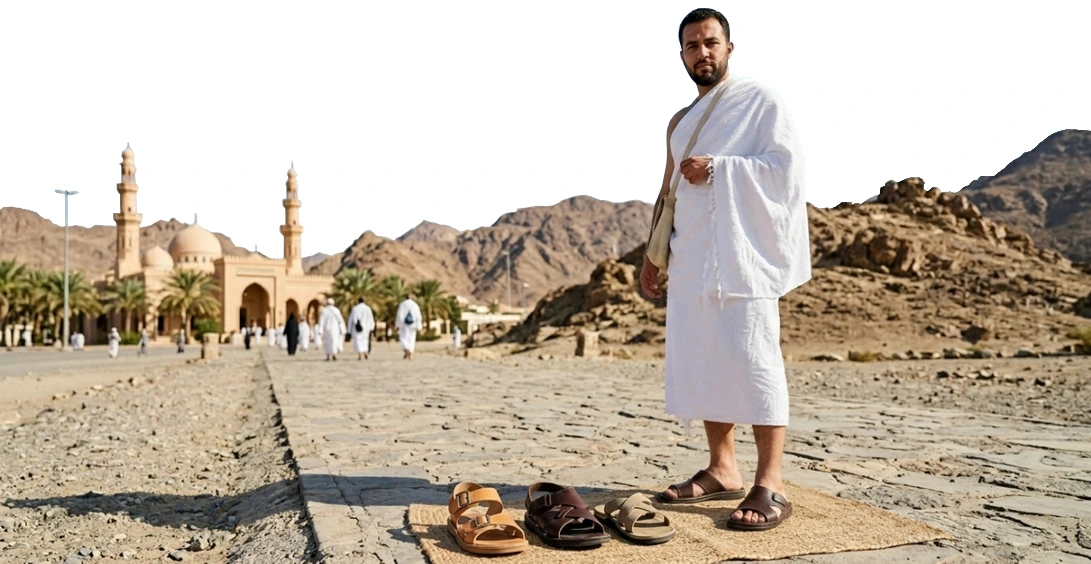
Choosing the right footwear for Ihram is essential during Hajj and Umrah. Men in Ihram cannot wear shoes that cover the ankles or upper foot, while women may wear modest closed or open footwear. Open sandals, flip-flops, and lightweight slippers remain the most common Ihram footwear choices for male pilgrims.
Pilgrims walk long distances during Tawaf, Sa’i, and daily movement around the Haram in Makkah and Madinah. Comfortable sandals with anti-slip soles, breathable materials, and cushioned footbeds reduce foot fatigue and blister risk. According to Islamic scholars, Ihram footwear for men must expose the ankle and instep area to remain sharia-compliant.
This guide explains permissible footwear during Ihram, stitched vs unstitched sandals, Crocs rulings, best Umrah sandals, and practical footwear tips for both men and women.
What Footwear is Allowed During Ihram?
Men in Ihram cannot wear footwear covering the ankles or upper foot because these conditions form part of the essential Ihram Rules followed during Hajj and Umrah. Islamic scholars permit open sandals, flip-flops, and lightweight slippers exposing the instep and ankle area. These footwear conditions maintain simplicity, humility, and proper Ihram appearance during Tawaf, Sa’i, and movement around Masjid al-Haram.
Women have fewer footwear restrictions during Hajj and Umrah. Women may wear closed shoes, trainers, sandals, or slippers if the footwear remains modest and comfortable for long walking hours.
Permissible Ihram footwear for men includes:
- Open sandals
- Flip-flops
- Lightweight slippers
- Open sports sandals
- Simple rubber sandals
The best Ihram sandals combine sharia compliance with walking comfort. Pilgrims walk long distances during Tawaf, Sa’i, and movement around Masjid al-Haram. Soft EVA soles, breathable materials, cushioned footbeds, and anti-slip rubber grip reduce foot pressure and blister risk on marble floors in Makkah.
Ihram Footwear Rules for Men
Men in Ihram cannot wear footwear covering the ankles or the upper foot. Islamic scholars base this ruling on authentic Hadith regarding khuff and enclosed shoes during Hajj and Umrah. Open sandals exposing the ankle bones and instep remain the safest footwear choice.
According to Hanafi scholars, the upper middle part of the foot must stay visible. Maliki, Shafi’i, and Hanbali scholars mainly focus on ankle exposure, though open footwear remains widely recommended across all madhhabs.
Permissible footwear for men includes:
- Flip-flops
- Open sandals
- Minimal sports sandals
- Simple rubber slippers
Footwear prohibited during Ihram includes:
- Sneakers
- Trainers
- Boots
- Loafers
- High-top sandals
- Socks
Pilgrims walking between Safa and Marwa benefit from lightweight sandals with soft straps, cushioned EVA soles, breathable materials, and anti-slip grip for wet marble floors inside Masjid al-Haram.
Ihram Footwear Rules for Women
Women may wear closed shoes, trainers, sandals, slippers, or socks during Ihram. Islamic rulings for women focus on modesty and comfort rather than ankle exposure. Comfortable walking footwear helps during Tawaf, Sa’i, and long walking hours around the Haram.
The best Umrah shoes for ladies include:
- Cushioned walking shoes
- Breathable trainers
- Lightweight sandals
- Orthopedic slippers
- Anti-slip footwear
Women often prefer soft mesh shoes or cushioned sandals because Makkah heat, crowded walkways, and marble floors increase foot fatigue. Neutral colours like black, beige, and white remain the most common footwear choices during Hajj and Umrah.
Why Footwear Rules Exist During Ihram
Pilgrims usually enter Ihram before crossing the designated Miqat Points while travelling toward Makkah for Hajj or Umrah. Ihram clothing, footwear restrictions, and pilgrimage intentions begin from these boundaries.
Many pilgrims prepare open sandals, flip-flops, and lightweight Ihram footwear before reaching the Miqat because enclosed shoes become unsuitable for male pilgrims after entering Ihram.
Best Sandals for Umrah and Hajj
The best Ihram footwear combines sharia compliance, walking comfort, and foot protection. Pilgrims spend hours walking during Tawaf, Sa’i, and movement around Masjid al-Haram. Lightweight sandals, cushioned soles, breathable materials, and anti-slip grip help reduce foot fatigue, swelling, and blister risk during Hajj and Umrah.
Best Open Sandals for Men in Ihram
Open sandals exposing the ankle and upper foot remain the safest option for men in Ihram. Lightweight rubber sandals, EVA sole slippers, and breathable leather sandals improve comfort during long walking hours. Anti-slip soles provide better grip on wet marble floors inside the Haram during Tawaf and Sa’i.
Best Umrah Shoes for Ladies
Women often choose cushioned walking shoes, breathable trainers, or lightweight sandals during Umrah. Soft arch support reduces foot pressure during Tawaf and daily walking in Makkah and Madinah. Breathable mesh footwear, orthopedic slippers, and anti-slip sandals improve walking comfort while maintaining modest and practical footwear choices.
Best Anti-Slip Sandals for Haram Marble Floors
Masjid al-Haram marble floors become slippery because of cleaning water, Zamzam water, and heavy crowds. Anti-slip rubber soles improve grip and walking stability during Tawaf and Sa’i. Pilgrims often prefer textured EVA soles and soft rubber sandals because they reduce slipping, foot pressure, and walking discomfort.
Best EVA Sole Sandals for Tawaf and Sa’i
EVA sole sandals absorb pressure during long walking hours between Safa and Marwa. Soft cushioned footbeds reduce heel pain, swelling, and foot fatigue during Hajj and Umrah. Lightweight EVA sandals also improve walking comfort on hot marble floors around the Haram and crowded pilgrimage pathways.
Can Men Wear Stitched Sandals During Ihram?
Islamic scholars differ regarding stitched sandals during Ihram. The main discussion focuses on whether the footwear encloses and shapes the foot like regular shoes. Open sandals exposing the ankle and upper foot remain the safest choice for male pilgrims.
Hanafi Opinion About Stitched Footwear
Hanafi scholars generally discourage stitched sandals covering or shaping the upper foot during Ihram. Unstitched sandals exposing the ankle and instep remain the preferred option. Many Hanafi pilgrims choose simple open sandals to avoid doubtful footwear rulings during Hajj and Umrah.
Shafi’i, Maliki, and Hanbali Opinions
Shafi’i, Maliki, and Hanbali scholars generally allow stitched sandals if the ankles and upper foot remain exposed. The prohibition mainly applies to enclosed footwear resembling trainers, boots, or loafers. Open sandals with light stitching remain permissible according to many scholars from these madhhabs.
Best Safe Option for All Madhhabs
Simple open sandals remain the safest Ihram footwear across all madhhabs. Lightweight sandals exposing the ankle and upper foot reduce scholarly disagreement. Pilgrims often choose minimal stitched sandals, soft rubber slippers, or open EVA sandals because they combine sharia compliance with long walking comfort.
Can You Wear Crocs During Ihram?
Crocs remain one of the most discussed Ihram footwear options. Islamic scholars mainly examine ankle exposure, upper foot coverage, and whether Crocs resemble enclosed shoes during Hajj and Umrah.
Are Crocs Allowed for Men?
Most Crocs cover the upper foot, making them unsuitable for men in Ihram. Some open-top Crocs exposing the ankle and instep may be permissible according to certain Hanafi scholars and modern fatwa opinions.
Are Crocs Allowed for Women?
Women may wear Crocs during Ihram because women can wear closed footwear. Simple, breathable, and non-flashy Crocs improve walking comfort during Tawaf, Sa’i, and long movement around Masjid al-Haram.
Better Alternatives to Crocs for Umrah
Open sandals, flip-flops, and lightweight EVA slippers remain safer alternatives for Ihram. These footwear options improve airflow, reduce foot sweating, and maintain proper ankle and upper foot exposure during Hajj and Umrah.
Can You Wear Flip-Flops or Sliders During Ihram?
Flip-flops remain one of the most common Ihram footwear choices for male pilgrims. Sliders may be permissible if they do not cover the ankle or large portions of the upper foot.
Flip-Flops for Men During Ihram
Flip-flops are widely permissible during Ihram because they expose the ankle and instep area. Lightweight flip-flops also improve airflow, reduce sweating, and provide comfortable walking during Tawaf, Sa’i, and movement around the Haram.
Sliders During Hajj and Umrah
Some sliders cover too much of the upper foot, making them unsuitable during Ihram. Safe sliders use narrow straps, open-top designs, lightweight EVA soles, and anti-slip grip for better walking comfort during Hajj and Umrah.
Footwear Prohibited During Ihram
Men in Ihram cannot wear footwear covering the ankles or upper foot. Enclosed shoes resemble regular daily footwear and conflict with the simplicity, humility, and visible foot exposure required during Hajj and Umrah.
Shoes Men Cannot Wear During Ihram
Footwear prohibited for men during Ihram includes trainers, sneakers, boots, loafers, and high-top sandals. These shoes cover the ankle or upper foot, making them unsuitable according to major Islamic scholarly opinions regarding Ihram clothing conditions.
Why Covered Shoes Are Not Allowed
Covered shoes hide the ankle and shape the foot like regular footwear. Islamic scholars prohibit enclosed shoes during Ihram because they resemble ordinary clothing and conflict with the simple appearance maintained during Hajj and Umrah.
Can Men Wear Socks During Ihram?
Men cannot wear socks during Ihram because socks fully cover the feet and ankles. Islamic scholars generally classify socks alongside enclosed footwear, making them unsuitable during Tawaf, Sa’i, and other Hajj or Umrah rituals.
Best Ihram Footwear for Elderly Pilgrims
Elderly pilgrims often experience foot swelling, heel pain, and walking fatigue during Hajj and Umrah. Soft cushioned sandals, anti-slip soles, and lightweight footwear improve walking comfort during Tawaf, Sa’i, and movement around Masjid al-Haram.
Soft Sole Sandals for Seniors
Soft sole sandals reduce joint pressure and improve walking stability for elderly pilgrims. EVA cushioned footbeds, orthopedic arch support, and lightweight rubber soles help seniors walk comfortably between Safa and Marwa and crowded Haram pathways during Umrah.
Anti-Blister Sandals for Elderly Pilgrims
Anti-blister sandals use soft straps, breathable materials, and cushioned footbeds to reduce skin friction. Elderly pilgrims often prefer open sandals with extra toe space because long walking hours and Makkah heat increase swelling and foot sensitivity.
Best Footwear for Diabetic Pilgrims During Umrah
Diabetic pilgrims require supportive footwear reducing pressure, friction, and foot injuries during Hajj and Umrah. Breathable sandals, orthopedic soles, and cushioned footbeds improve comfort during Tawaf, Sa’i, and long walking around Masjid al-Haram.
Recommended Sandals for Sensitive Feet
Orthopedic sandals with soft EVA soles reduce foot pressure and walking discomfort for diabetic pilgrims. Breathable mesh materials, anti-slip rubber grip, and wide toe space improve circulation and reduce friction during long walking hours in Makkah.
Foot Care Tips During Hajj and Umrah
Diabetic pilgrims benefit from dry feet, breathable sandals, and soft cushioned soles during Umrah. Regular foot inspection, moisture control, blister prevention, and reduced walking pressure help prevent skin irritation and foot injuries during crowded pilgrimage movement.
How to Choose Comfortable Ihram Footwear
Comfortable Ihram footwear reduces foot fatigue, swelling, and blister risk during Hajj and Umrah. Pilgrims walking long distances during Tawaf and Sa’i benefit from lightweight sandals, cushioned soles, breathable materials, and anti-slip grip on Haram marble floors.
Features of Comfortable Umrah Sandals
Comfortable Umrah sandals use cushioned EVA footbeds, soft arch support, breathable straps, and anti-slip rubber soles. Lightweight sandals reduce foot pressure during Tawaf, Sa’i, and long walking hours between hotels, Haram entrances, and crowded pilgrimage areas.
Best Materials for Ihram Footwear
Soft leather, EVA foam, mesh fabric, and rubber soles remain popular Ihram footwear materials. Breathable materials reduce sweating and heat buildup, while cushioned rubber soles improve walking comfort and grip on polished marble floors inside Masjid al-Haram.
Foot Swelling During Umrah and Hajj
Pilgrims arriving through a Jeddah to Makkah Taxi often prefer cushioned sandals because long travel hours and walking increase foot swelling and fatigue before Umrah rituals begin. Lightweight EVA sandals, breathable footwear, and anti-slip rubber soles improve comfort during the journey from Jeddah Airport toward Makkah, Miqat Points, and Masjid al-Haram.
Practical Tips for Wearing Ihram Sandals
Many pilgrims keep lightweight sandals easily accessible while travelling between hotels, Haram entrances, and booking an Umrah Taxi for daily movement around Makkah and Madinah.
Comfortable anti-slip sandals improve walking safety because pilgrims frequently move between prayer areas, shopping locations, hotels, and Masjid al-Haram during Hajj and Umrah.
How to Prevent Blisters During Tawaf
Soft straps, cushioned footbeds, and tested sandals reduce blister formation during Tawaf and Sa’i. Pilgrims often break sandals in before travel because new footwear increases friction, swelling, skin irritation, and walking discomfort inside Masjid al-Haram.
How to Keep Ihram Footwear Clean
Daily wiping removes dust, sweat, and dirt from Ihram sandals during Hajj and Umrah. Many pilgrims use drawstring shoe bags, spare sandals, and portable storage pouches to maintain footwear hygiene around crowded Haram entrances and pathways.
Where to Keep Shoes During Tawaf
Pilgrims usually keep footwear inside shoe bags, portable pouches, or mosque shoe shelves during Tawaf. Lightweight drawstring bags reduce shoe loss and improve movement around Masjid al-Haram during crowded prayer and pilgrimage hours.
Best Features to Look for in Umrah Footwear
The best Umrah footwear combines sharia compliance, walking comfort, and foot protection. Pilgrims walking for hours during Tawaf and Sa’i benefit from lightweight sandals, anti-slip soles, breathable materials, and cushioned footbeds suitable for crowded Haram conditions.
Essential Sandal Features
Quality Ihram sandals use anti-slip rubber soles, breathable straps, lightweight EVA materials, and soft arch support. These features improve walking comfort, reduce foot fatigue, and provide better grip on polished marble floors inside Masjid al-Haram.
Footwear Features for Long Walking Hours
Shock absorption, sweat resistance, flexible soles, and wide toe space improve walking comfort during Hajj and Umrah. Cushioned sandals reduce heel pressure and blister formation during Tawaf, Sa’i, and daily movement between hotels and Haram entrances.
Frequently Asked Questions About Ihram Footwear
Can Men Wear Sports Sandals During Ihram?
Men may wear sports sandals during Ihram if the sandals leave the ankles and upper foot exposed. Lightweight open sports sandals with anti-slip soles improve walking comfort during Tawaf, Sa’i, and long Haram movement.
Are Nike Sandals Allowed During Umrah?
Nike sandals remain permissible if they follow Ihram footwear conditions for men. Open sandals exposing the ankle and instep remain acceptable, while enclosed sports slides or covered sandals become unsuitable during Ihram.
Can Women Wear Trainers During Hajj?
Women may wear trainers during Hajj and Umrah because women face no ankle exposure restriction in Ihram. Breathable trainers, cushioned walking shoes, and orthopedic footwear improve comfort during long walking hours around the Haram.
What Sandals Are Best for Tawaf?
The best Tawaf sandals use anti-slip rubber soles, cushioned EVA footbeds, and breathable straps. Lightweight sandals reduce foot fatigue, swelling, and slipping risk on polished marble floors inside Masjid al-Haram.
Can I Wear Stitched Slippers During Ihram?
Stitched slippers remain permissible according to many scholars if the slippers leave the ankle and upper foot exposed. Hanafi scholars often prefer unstitched sandals because enclosed or shaped footwear resembles regular daily shoes.
Are Barefoot Tawaf and Sa’i Recommended?
Barefoot Tawaf and Sa’i remain permissible but may increase foot pain, heat exposure, and slipping risk. Many pilgrims prefer lightweight anti-slip sandals because Haram marble floors become hot, crowded, and physically demanding during Hajj seasons.
Can Pilgrims Wear Orthopedic Sandals in Ihram?
Orthopedic sandals remain permissible if they follow Ihram footwear conditions for men. Cushioned orthopedic soles, soft arch support, and anti-slip grip improve walking comfort for elderly pilgrims, diabetic pilgrims, and people experiencing foot pain.
Conclusion
Choosing the correct Ihram footwear helps pilgrims maintain sharia compliance and walking comfort during Hajj and Umrah. Men require sandals exposing the ankle and upper foot, while women may wear modest closed or open footwear during Tawaf, Sa’i, and movement around Masjid al-Haram.
Lightweight sandals, anti-slip rubber soles, breathable materials, and cushioned EVA footbeds reduce foot fatigue, swelling, and blister formation during long walking hours in Makkah and Madinah. Many pilgrims prefer open sandals, flip-flops, or orthopedic footwear because crowded marble floors increase walking pressure during pilgrimage rituals.
Pilgrims following Hanafi, Shafi’i, Maliki, or Hanbali opinions often choose simple open sandals because they remain the safest and most widely accepted Ihram footwear option.
