
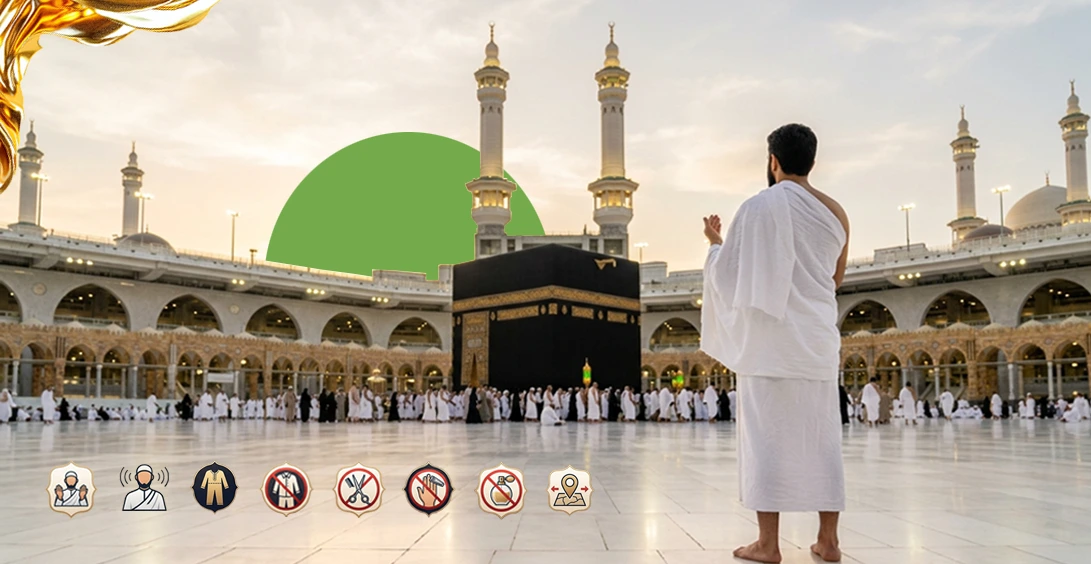
Ihram is a sacred state required before performing Umrah or Hajj. Every pilgrim must enter Ihram before crossing the Miqat boundary. Ihram includes intention, Talbiyah, and specific religious restrictions. Pilgrims travelling by air, road, or sea must prepare before reaching Miqat. Airlines usually announce Miqat during international flights.
Ihram rules for men and women differ. Men wear two white unstitched sheets called Izar and Rida. Men cannot wear stitched clothing or cover their heads intentionally. Women can wear loose modest Islamic clothing in any colour. Women do not wear special white garments during Ihram. After making Niyyah and reciting Talbiyah, pilgrims officially enter the state of Ihram.
Several actions become prohibited during Ihram. Pilgrims cannot cut hair, trim nails, apply perfume, hunt animals, or engage in marital relations. Understanding Ihram rules before entering Makkah helps pilgrims avoid Miqat violations and complete Umrah correctly. The next sections explain Miqat boundaries, Ihram rules for ladies, Ihram rules for men, Hanafi rulings, and common Ihram mistakes.
What Is Ihram In Islam?
Ihram is a sacred state required before performing Umrah or Hajj. Ihram begins after making Niyyah and reciting Talbiyah before crossing Miqat. Many Muslims think Ihram only means white clothing. In reality, Ihram is a spiritual and physical state with specific restrictions. Men wear two unstitched white sheets called Izar and Rida.
Women wear loose modest Islamic clothing without special garments. During Ihram, pilgrims cannot cut hair, trim nails, apply perfume, or engage in marital relations. Ihram represents humility, equality, purity, obedience, and preparation before entering Makkah.
Why Ihram Is Required Before Entering Makkah
Ihram is required before entering Makkah for Umrah or Hajj because Miqat boundaries were established by Muhammad. Every pilgrim intending Umrah or Hajj must enter the state of Ihram before crossing Miqat. These boundaries apply to travellers arriving by air, road, or sea from different regions.
Miqat acts as a religious boundary for pilgrims entering Makkah. Crossing Miqat without Ihram while intending Umrah becomes a violation in Islamic law. Many scholars state that pilgrims must return to Miqat or offer Damm compensation if they cross without Ihram intentionally. This ruling protects the sanctity and preparation of pilgrimage.
The Quran and authentic Hadith emphasize obedience, purity, and preparation during pilgrimage. Ihram prepares Muslims spiritually before entering the sacred city of Makkah. Pilgrims leave worldly appearance and focus completely on worship, humility, and submission to Allah before performing Umrah rituals.
Miqat Boundaries For Pilgrims Entering Makkah
Miqat boundaries are specific locations where pilgrims must enter Ihram before travelling to Makkah for Umrah or Hajj. These Miqat points were established by Muhammad for pilgrims arriving from different directions. Crossing Miqat without Ihram while intending Umrah becomes a violation according to Islamic rulings.
Main Miqat Locations For Pilgrims
| Miqat | Common Travel Regions |
| Dhul Hulayfah | Pilgrims travelling from Madinah |
| Juhfah | Travellers from Africa, Syria, and Europe |
| Yalamlam | Pilgrims from Pakistan, India, and Yemen |
| Qarn al-Manazil | Travellers from Najd and GCC regions |
| Dhat Irq | Pilgrims arriving from Iraq areas |
Most pilgrims travelling from United Kingdom, United States, Pakistan, and Asian countries enter Ihram during flights before crossing Miqat. Airlines commonly announce Miqat around 30 to 45 minutes before crossing. Pilgrims usually wear Ihram clothing before boarding and make Niyyah near Miqat.
Many pilgrims become confused about entering Ihram after landing in Jeddah. This understanding is incorrect for most international travellers. Pilgrims intending Umrah cannot delay Ihram until reaching a hotel in Makkah or Jeddah. Ihram becomes compulsory before crossing the assigned Miqat boundary.
How To Enter The State Of Ihram Step By Step
Every pilgrim performing Umrah or Hajj enters Ihram before crossing Miqat. Entering the state of Ihram includes physical preparation, intention, and Talbiyah. Proper Ihram preparation helps pilgrims avoid common mistakes before entering Makkah.
1. Perform Ghusl Before Ihram
Pilgrims perform Ghusl before entering Ihram. Ghusl means full body purification in Islam. Men and women both perform Ghusl before Miqat. Pilgrims also trim nails, remove unwanted hair, and maintain hygiene before entering Ihram. These actions become restricted after entering Ihram.
2. Apply Perfume Before Niyyah
Men can apply perfume before making Niyyah for Ihram. Perfume applied before Ihram remains permissible after entering the sacred state. However, applying new perfume after Niyyah becomes prohibited. Women avoid strong fragrances publicly during Umrah travel.
3. Wear Ihram Clothing
Men wear two white unstitched sheets called Izar and Rida. The lower sheet covers the body below the waist. The upper sheet covers the shoulders and upper body. Women wear loose modest Islamic clothing covering the full body except face and hands. Women do not wear special white Ihram garments.
4. Pray Salah Before Ihram
Many pilgrims pray two Rakats before making Niyyah for Ihram. This prayer is Sunnah before entering the sacred state. Pilgrims also perform Wudhu before reciting Talbiyah and starting Umrah travel.
5. Make Niyyah And Recite Talbiyah
Pilgrims officially enter Ihram after making intention for Umrah or Hajj. After Niyyah, pilgrims recite Talbiyah immediately. Men recite Talbiyah loudly while women recite softly. Talbiyah continues frequently until Tawaf begins in Makkah.
Grooming Rules Before Ihram
Pilgrims complete personal grooming before entering Ihram for Umrah or Hajj. These hygiene preparations become restricted after making Niyyah. Proper grooming before Miqat helps pilgrims avoid Ihram violations during travel to Makkah.
Men and women trim nails before entering Ihram. Pilgrims also remove underarm and pubic hair before Miqat. Many Muslims trim the moustache and maintain Sunnah hygiene before starting Umrah. These preparations are recommended before entering the sacred state.
Pilgrims usually perform Ghusl before wearing Ihram clothing. Cleanliness and purification remain important Sunnah acts before pilgrimage. Many pilgrims also use unscented soap before entering Ihram. After making Niyyah, applying perfume or scented products becomes prohibited during Ihram.
Niyyah And Talbiyah For Umrah
Niyyah officially begins the state of Ihram before entering Makkah. Pilgrims make intention for Umrah or Hajj near Miqat. Most travellers make Niyyah during flights after airline Miqat announcements. Entering Ihram without intention remains incomplete.
After making Niyyah, pilgrims recite Talbiyah immediately. The famous Talbiyah for Umrah states:
“Labbayka Allahumma Labbayk, Labbayka La Sharika Laka Labbayk.”
Talbiyah means complete obedience and response to Allah’s call for pilgrimage. Men recite Talbiyah loudly while women recite softly. Pilgrims continue Talbiyah frequently until starting Tawaf in Makkah.
Ihram Rules For Men Before Entering Makkah
Men follow specific Ihram rules before entering Makkah for Umrah or Hajj. Male pilgrims wear two unstitched white sheets called Izar and Rida. The lower garment covers the body below the waist. The upper garment covers the shoulders and upper body. These simple garments represent humility, equality, and simplicity during pilgrimage.
Men cannot wear stitched fitted clothing after entering Ihram. Shirts, trousers, underwear, hoodies, and stitched garments become prohibited during the sacred state. Men also cannot intentionally cover the head using caps, turbans, hats, or attached hoods. These restrictions continue until Umrah or Hajj rituals finish.
Footwear rules also apply during Ihram. Men wear open sandals exposing the ankles and upper foot bones. Socks and fully covered shoes become prohibited for many scholars during Ihram. Pilgrims commonly use slippers or open sandals while travelling between Miqat and Makkah.
Some accessories remain permissible during Ihram for men. Pilgrims can use belts, watches, eyeglasses, umbrellas, mobile phones, and money pouches. These items help pilgrims travel comfortably without violating Ihram restrictions. Many pilgrims use waist belts to secure the Izar during Tawaf and Sa’i.
How To Wear Ihram For Umrah Male
Male pilgrims wear two white unstitched sheets before crossing Miqat. The lower sheet called Izar wraps around the waist and covers the body below the knees. The upper sheet called Rida covers both shoulders and the upper body. Pilgrims usually secure the Ihram using clips, pins, or belts.
During Tawaf, men uncover the right shoulder temporarily. This practice is called Idtiba in Islamic pilgrimage. Men place the Rida under the right arm and over the left shoulder during Tawaf only. Both shoulders become covered again after Tawaf finishes.
Many pilgrims wear Ihram clothing before reaching the airport. International travellers commonly change clothes at home or airport facilities before flights. Pilgrims then make Niyyah near Miqat during travel to Makkah.
Forbidden Clothing For Men In Ihram
Several clothing items become prohibited after entering Ihram. Men cannot wear stitched shirts, trousers, underwear, jackets, or uniforms. Hoodies, caps, turbans, and hats also become prohibited because they cover the head intentionally.
Covered footwear also creates confusion among pilgrims. Many scholars prohibit shoes covering the ankles and upper foot bones during Ihram. Open sandals remain the most common and safest option for male pilgrims. Socks also become prohibited unless necessary because of medical conditions or extreme circumstances.
Understanding these Ihram rules for men helps pilgrims avoid violations before entering Makkah. The next section explains Ihram rules for ladies, women’s clothing guidance, and Hanafi rulings during Umrah.
Ihram Rules For Ladies Before Entering Makkah
Women follow different Ihram rules from men during Umrah and Hajj. Female pilgrims do not wear special white unstitched garments during Ihram. Women wear loose modest Islamic clothing covering the full body except the face and hands. Clothing remains simple, non-transparent, and comfortable during travel to Makkah.
Women can wear black, white, or coloured clothing during Ihram. Islam does not require specific Ihram colours for female pilgrims. Many women wear an Abaya with Hijab for comfort and modesty during pilgrimage. Socks, sandals, and comfortable shoes also remain permissible during Ihram for women.
Face covering rules create confusion for many female pilgrims. Women cannot wear a Niqab touching the face directly during Ihram according to many scholars. However, women can lower a loose cloth from the head over the face around non-Mahram men. This method helps maintain modesty without direct face covering.
Women also avoid perfume and scented products after entering Ihram. Hair cutting, nail trimming, and marital relations become prohibited after making Niyyah. These restrictions continue until Umrah rituals finish in Makkah.
How To Do Ihram For Umrah For Ladies
Women prepare for Ihram before crossing Miqat during Umrah travel. Female pilgrims perform Ghusl and complete personal hygiene before entering Ihram. Many women wear loose Abayas, Hijabs, and comfortable footwear before reaching the airport or Miqat boundary.
After preparation, women make Niyyah for Umrah and recite Talbiyah softly. Female pilgrims continue Talbiyah during travel toward Makkah. Women remain in the sacred state until Umrah rituals finish.
Women can also enter Ihram during menstruation. Menstruation does not prevent women from making Niyyah or reciting Talbiyah. Female pilgrims can travel with the group and complete most Umrah activities except Tawaf. Tawaf begins after purification ends.
Ihram Rules For Ladies Hanafi school
According to the Hanafi school madhhab, women cannot wear a Niqab touching the face during Ihram. Female pilgrims instead use the hanging veil method around non-Mahram men. A loose cloth hangs from the head without touching the face directly.
Hanafi scholars also prohibit gloves during Ihram for women. However, socks, shoes, and stitched clothing remain permissible for female pilgrims. Women continue observing modest Islamic dress throughout Umrah and Hajj travel.
If a woman intentionally violates Ihram restrictions, compensation may become necessary according to Hanafi rulings. Penalties may include Sadaqah or Damm depending on the violation type and duration. Understanding Hanafi Ihram rules helps female pilgrims avoid common mistakes before entering Makkah.
Can I Wear Ihram In Makkah Hotel?
Pilgrims intending Umrah cannot delay Ihram until reaching a hotel in Makkah. Ihram becomes compulsory before crossing Miqat. Entering Makkah without Ihram for Umrah creates a Miqat violation according to Islamic rulings.
Many international travellers wear Ihram clothing before boarding flights. Pilgrims usually make Niyyah and recite Talbiyah near Miqat during travel. Airlines commonly announce Miqat before crossing the boundary.
Pilgrims already inside Makkah can wear Ihram again for a second Umrah. They travel outside the Haram boundary and re-enter Ihram from places like Masjid Aisha in Taneem. This location remains one of the most common Miqat points for additional Umrah.
Ihram Rules For Travelers Arriving From Jeddah Airport
Most travellers arriving through King Abdulaziz International Airport enter Ihram before landing. Pilgrims travelling from Pakistan, India, United Kingdom, and United States usually cross Miqat during flights.
Pilgrims commonly wear Ihram clothing at home or airport facilities before departure. Most airlines announce Miqat around 30 to 45 minutes before crossing. Pilgrims then make Niyyah and begin Talbiyah onboard the aircraft.
Delaying Ihram until landing in Jeddah may create a Miqat violation for pilgrims intending Umrah. Proper preparation before travel helps pilgrims avoid mistakes before entering Makkah.
Ihram Rules For Ladies Before Entering Makkah
Women follow different Ihram rules from men during Umrah and Hajj. Female pilgrims do not wear special white unstitched garments during Ihram. Women wear loose modest Islamic clothing covering the full body except the face and hands. Clothing remains simple, non-transparent, and comfortable during travel to Makkah.
Women can wear black, white, or coloured clothing during Ihram. Islam does not require specific Ihram colours for female pilgrims. Many women wear an Abaya with Hijab for comfort and modesty during pilgrimage. Socks, sandals, and comfortable shoes also remain permissible during Ihram for women.
Face covering rules create confusion for many female pilgrims. Women cannot wear a Niqab touching the face directly during Ihram according to many scholars. However, women can lower a loose cloth from the head over the face around non-Mahram men. This method helps maintain modesty without direct face covering.
Women also avoid perfume and scented products after entering Ihram. Hair cutting, nail trimming, and marital relations become prohibited after making Niyyah. These restrictions continue until Umrah rituals finish in Makkah.
How To Do Ihram For Umrah For Ladies
Women prepare for Ihram before crossing Miqat during Umrah travel. Female pilgrims perform Ghusl and complete personal hygiene before entering Ihram. Many women wear loose Abayas, Hijabs, and comfortable footwear before reaching the airport or Miqat boundary.
After preparation, women make Niyyah for Umrah and recite Talbiyah softly. Female pilgrims continue Talbiyah during travel toward Makkah. Women remain in the sacred state until Umrah rituals finish.
Women can also enter Ihram during menstruation. Menstruation does not prevent women from making Niyyah or reciting Talbiyah. Female pilgrims can travel with the group and complete most Umrah activities except Tawaf. Tawaf begins after purification ends.
Ihram Rules For Ladies Hanafi school
According to the Hanafi school madhhab, women cannot wear a Niqab touching the face during Ihram. Female pilgrims instead use the hanging veil method around non-Mahram men. A loose cloth hangs from the head without touching the face directly.
Hanafi scholars also prohibit gloves during Ihram for women. However, socks, shoes, and stitched clothing remain permissible for female pilgrims. Women continue observing modest Islamic dress throughout Umrah and Hajj travel.
If a woman intentionally violates Ihram restrictions, compensation may become necessary according to Hanafi rulings. Penalties may include Sadaqah or Damm depending on the violation type and duration. Understanding Hanafi Ihram rules helps female pilgrims avoid common mistakes before entering Makkah.
Can I Wear Ihram In Makkah Hotel?
Pilgrims intending Umrah cannot delay Ihram until reaching a hotel in Makkah. Ihram becomes compulsory before crossing Miqat. Entering Makkah without Ihram for Umrah creates a Miqat violation according to Islamic rulings.
Many international travellers wear Ihram clothing before boarding flights. Pilgrims usually make Niyyah and recite Talbiyah near Miqat during travel. Airlines commonly announce Miqat before crossing the boundary.
Pilgrims already inside Makkah can wear Ihram again for a second Umrah. They travel outside the Haram boundary and re-enter Ihram from places like Masjid Aisha in Taneem. This location remains one of the most common Miqat points for additional Umrah.
Ihram Rules For Travelers Arriving From Jeddah Airport
Most travellers arriving through King Abdulaziz International Airport enter Ihram before landing in Saudi Arabia. Pilgrims travelling from Pakistan, India, United Kingdom, and United States usually cross Miqat during flights.
Things Forbidden During Ihram
Several actions become prohibited after entering Ihram for Umrah or Hajj. These restrictions apply until pilgrimage rituals finish in Makkah.
Pilgrims cannot cut hair or trim nails during Ihram. Applying perfume, deodorant, or scented products also becomes prohibited after Niyyah. Men and women both avoid marital relations and physical intimacy during the sacred state.
Hunting animals becomes prohibited during Ihram. Pilgrims also avoid arguments, abusive language, and harmful behaviour during pilgrimage. These restrictions protect the spiritual purpose and discipline of Ihram.
Prohibited Actions For Men Only
Male pilgrims cannot wear stitched fitted clothing during Ihram. Shirts, trousers, underwear, jackets, and uniforms remain prohibited. Men also cannot cover the head intentionally using caps, turbans, or hats.
Footwear rules also apply to men during Ihram. Shoes covering the ankles and upper foot bones become prohibited according to many scholars. Open sandals remain the most common footwear choice during Umrah.
Common Ihram Mistakes Pilgrims Make
Many pilgrims cross Miqat without entering Ihram correctly. This mistake commonly happens during international flights to Jeddah. Pilgrims intending Umrah must enter Ihram before crossing Miqat.
Using scented soap, perfume, or deodorant after Niyyah is another common mistake. Many male pilgrims also wear covered shoes or stitched undergarments accidentally during Ihram.
Female pilgrims sometimes wear a Niqab touching the face directly during Ihram. According to many scholars, women should avoid direct face covering during the sacred state. Understanding these Ihram rules before entering Makkah helps pilgrims avoid violations and penalties.
Penalties For Breaking Ihram Rules
Breaking Ihram rules during Umrah may require compensation depending on the violation type. Common penalties include Damm, Sadaqah, or fasting. Cutting hair, applying perfume, wearing prohibited clothing, or crossing Miqat without Ihram may result in penalties according to Islamic rulings.
Scholars also differentiate between intentional and accidental violations during Ihram. Some mistakes may require only charity, while major violations may require animal sacrifice. Penalty rulings also differ slightly between madhhabs including the Hanafi school. Pilgrims should consult qualified scholars for specific Ihram violation cases before completing Umrah in Makkah.
Modern Ihram Situations And Travel Questions
Most international pilgrims wear Ihram clothing before boarding flights to Jeddah. Pilgrims usually make Niyyah and recite Talbiyah after airline Miqat announcements. Bathing, changing Ihram sheets, and washing clothes remain permissible during Ihram. However, pilgrims must avoid scented soap, shampoo, and perfume after entering the sacred state.
Pilgrims can also use belts, watches, mobile phones, eyeglasses, and umbrellas during Ihram. Men may use umbrellas for shade because they do not count as stitched head coverings. Many pilgrims use waist belts and pouches to secure money, passports, and travel documents while travelling toward Makkah.
Spiritual Purpose Of Ihram Before Entering Makkah
Ihram represents humility, equality, and obedience before Allah during Umrah and Hajj. Rich and poor pilgrims wear simple clothing without worldly status or luxury. Millions of Muslims enter the same sacred state while travelling toward Makkah for worship.
Ihram also prepares pilgrims spiritually before entering the holy city. Pilgrims leave worldly identity, arguments, and distractions behind during pilgrimage. Talbiyah, simplicity, and discipline help Muslims focus completely on worship, repentance, and submission to Allah before performing Umrah rituals.
Frequently Asked Questions
Can women wear coloured clothes in Ihram?
Yes, women can wear coloured clothing during Umrah. Islam does not require white Ihram garments for female pilgrims. Clothes should remain loose, modest, and non-transparent before entering Makkah.
Can I shower during Ihram?
Yes, pilgrims can shower and bathe during Ihram. Pilgrims should avoid scented soap, shampoo, deodorant, and perfume after making Niyyah. Unscented hygiene products remain the safest option during Ihram.
Can men wear belts during Ihram?
Yes, men can wear belts, money pouches, and waist bags during Ihram. These items help secure the Izar and carry travel documents safely during Umrah travel.
Can I sleep in Ihram?
Yes, sleeping during Ihram remains permissible. Male pilgrims should avoid intentionally covering the head while sleeping during Umrah or Hajj.
Can women wear socks during Ihram?
Yes, women can wear socks, sandals, and comfortable shoes during Ihram. Female pilgrims follow normal modest Islamic clothing rules during pilgrimage.
What happens if I cross Miqat without Ihram?
Crossing Miqat without Ihram while intending Umrah may require returning to Miqat or paying Damm compensation. Penalty rulings differ slightly between Islamic schools of thought.
Can I use deodorant during Ihram?
Pilgrims cannot use scented deodorant after entering Ihram. Unscented deodorant and fragrance-free hygiene products remain permissible according to many scholars.
Can women enter Ihram during menstruation?
Yes, women can enter Ihram during menstruation. Female pilgrims can make Niyyah, recite Talbiyah, and travel with the group. Tawaf begins after purification ends in Makkah.
Can I perform second Umrah from Makkah hotel?
Pilgrims already inside Makkah can perform another Umrah after leaving the Haram boundary. Many pilgrims re-enter Ihram from Masjid Aisha in Taneem.
Is Ihram required before landing in Jeddah?
Yes, most international pilgrims intending Umrah must enter Ihram before crossing Miqat during flights to Jeddah. Delaying Ihram until landing may create a Miqat violation.
